medicines and answers

ca. 1998
Many (many) years ago, I was a nerdy kid who loved anatomy textbooks and herbal medicine textbooks in equal measure.
I wanted answers — was obsessed with answers. How could I fix what hurts, in myself and in others? I was convinced that if I studied enough, analyzed enough, memorized enough, I’d find all the answers — the root cause, the right antidote, the perfect dosage — and the problem would be fixed for good.
For a while, that worked — but of course, the problems we actually face are never really that simple.
How can we mend what hurts, in ourselves and in others?
These days, I’m much more interested in the question than the answers.
“Fixing” is rarely part of my vocabulary now. When I work with clients, much of what we talk about it is getting comfortable with what is — holding multiple truths in mind at once, mending what needs grief, releasing what cannot be repaired. We work with an exploration of asking better questions — and “how can I fix this” is rarely a good question, when it comes to the work of social change and relational practice.
What questions are you asking, these days?
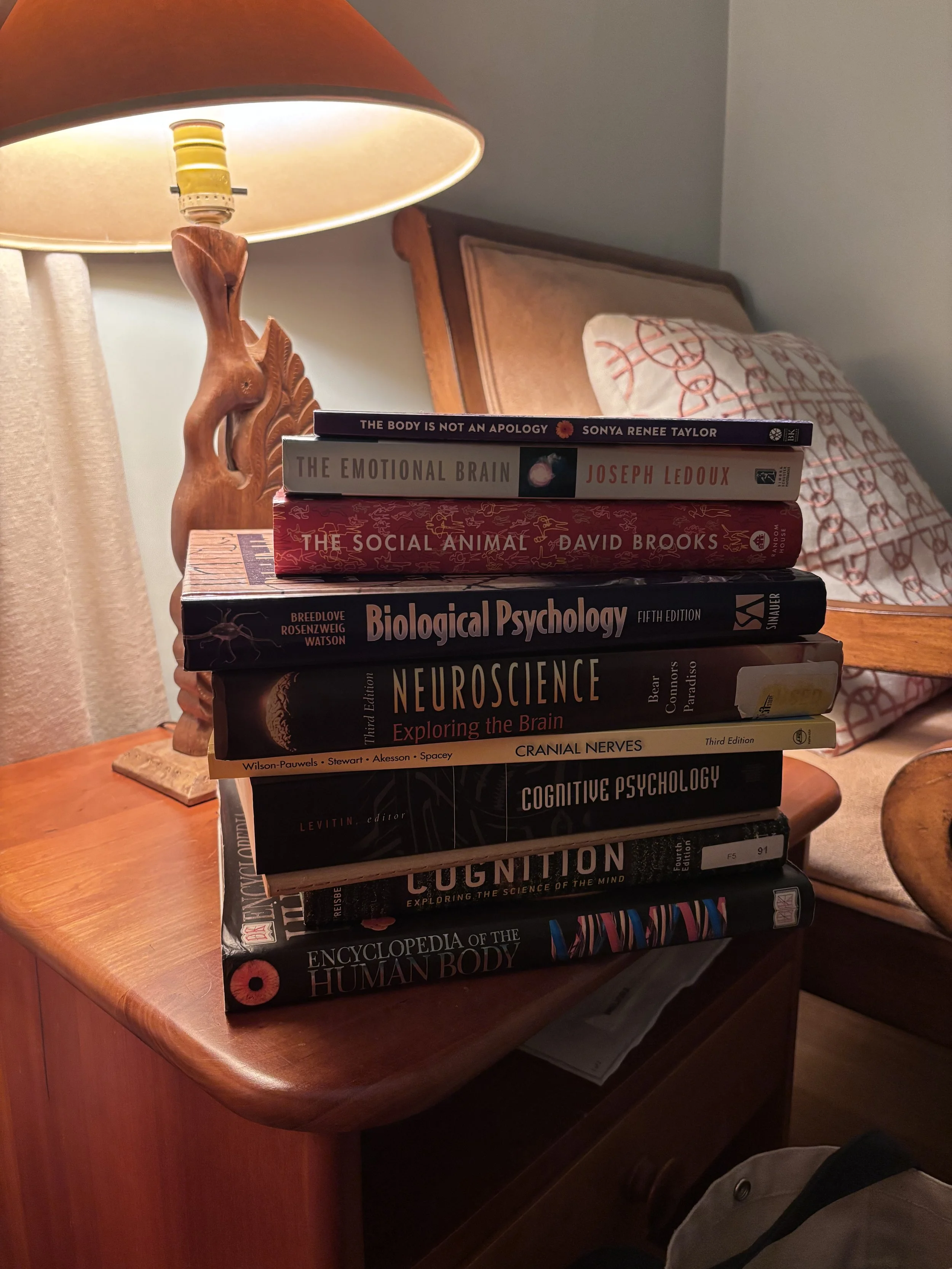
ps — my 10-year-old self’s favorite anatomy textbook is the one on the bottom of this pile. The rest are all neuro textbooks from my college days, pulled out to draft a talk on neurodivergence and disability justice last week.