learning to look
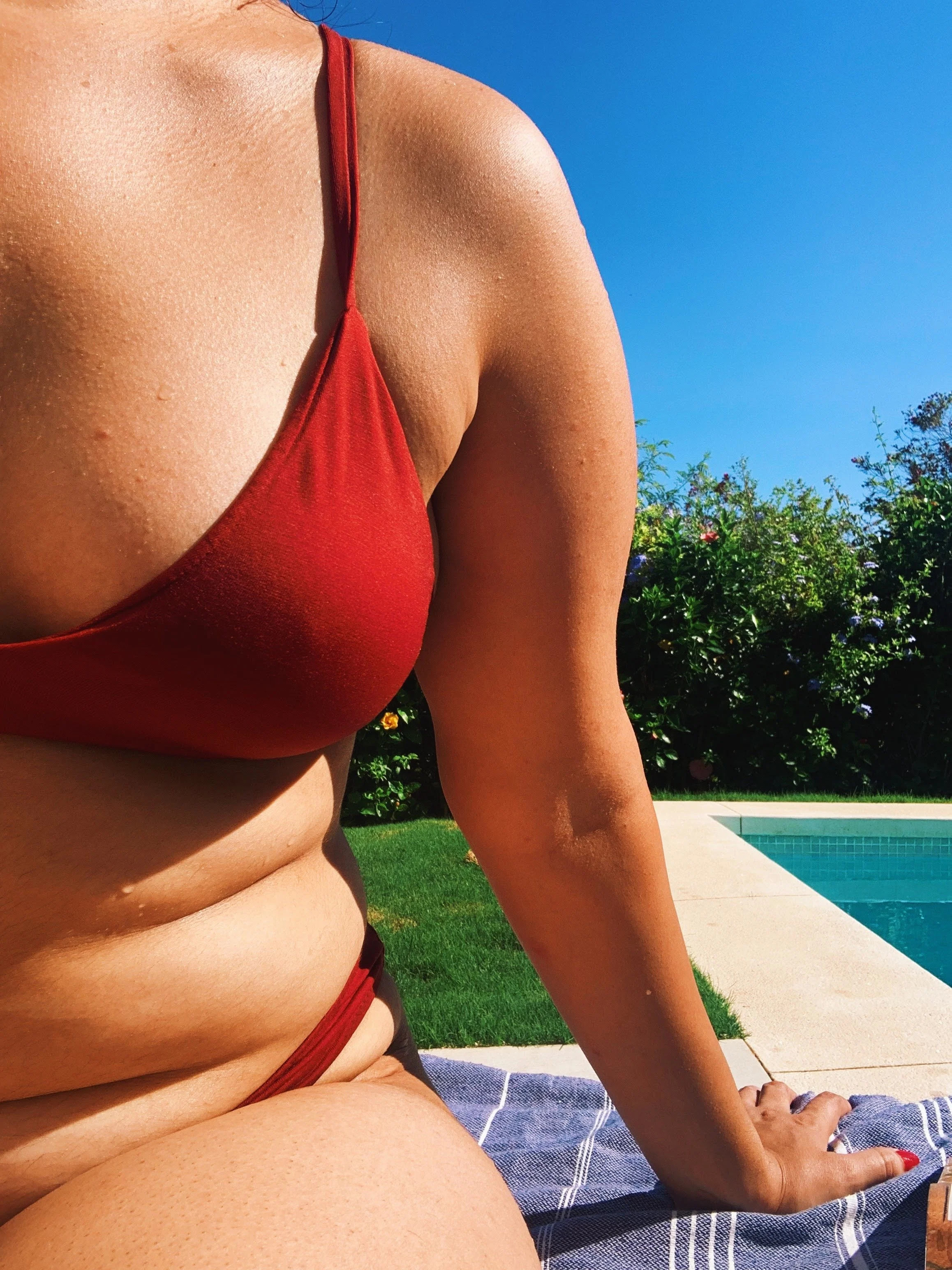
I am not an artist, and I love going to open figure drawing sessions. I’m fascinated by how artists see the body as a collection of shapes, lines, colors, shadows, light. How much could we deconstruct the stories we all carry about our bodies, as well as the systems that shape those stories, if we could look at what is, instead of what we wish were or weren’t there?
As a disabled person, as a survivor, as just a woman living in a body, I taught myself how to look at bodies dispassionately, before I could look at mine with care. I learned to look with tender distance — before and after surgeries I expected, even more so after the ones I didn’t expect; before and after chronic illness; before and after people who touched it badly or well. Many of us find ourselves avoiding mirrors, in those moments when we find the steely gaze of a stranger in the glass instead of our own familiar contours. Bodies change, mirroring the transitions in our lives. We either learn to look softly or we run away from ourselves.
Figure drawing snippets and quick snapshots — a leg here, a scar there, a roll of belly, a divot of skin — brought me back home to myself. These photos don’t usually see the light of day. I take them for myself and no one else. I’m sharing a few now to pull back the curtain a little, for proof of what I teach and and why I teach it.
For a while, I considered learning to be a figure model, just to be on the other side of those artists’ eyes — to be seen and sketched as a collection of shapes, lines, colors, shadows, light. What if we gave that to ourselves? What if we saw our bodies as art?